Ballet Steps
Ballet steps are the very foundation of dance and you will practice them in every single class, even when you are a professional ballerina.
Once you have grasped the secrets to ballet positions, next you need to master the steps. Training ballet dancers have a class everyday in order to build the strength and precision that is needed for the steps.
The steps will get harder as you begin to progress through the levels and develop as a dancer, but the basics will remain the same.
Ballet dancers spend most of their time perfecting the basic steps, so it is crucial to get these right.
The basic steps are just as important as the challenging ones.
The linking ballet steps and preparations are most important to add clarity to your dancing. Dancers don't always get corrected on the main steps like Pirouettes or Grand Jetes, as much as the smaller steps that lead into these movements.
Pas de bourrée is made up of three quick steps. It takes off from a plie and goes through a tight fifth position, on demi-pointe or pointe.
A typical combination which many ballet teachers use in your classes is "Chassé pas de bourrée glissade grand jeté". The Pas de bourrée is the key linking step to move and travel into grand jete. It should be performed with quick footwork and controlled turn out in the legs.
Glissade is known as the 'gliding
step' and it is included in mostly all allegro exercises. It starts in a
fifth position and plies from two feet, quickly stretching the legs and
feet in the air, then landing back in fifth position again.
It travels to the side, front or back and is nearly always used as a preparation step. It's important to action the feet quickly and use the floor to make the movement.
Temps levé is another key step which is translated to 'raised movement'. It is a jump from one foot and landing back on the same foot.
It takes a lot of strength in the legs and feet to action the muscles whilst taking off from just one foot.
Temps levé is mainly performed in an arabesque position or jete for petit allegro. You have to really concentrate on stretching the underneath foot to make the jump.
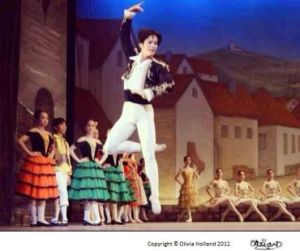
Remember, ballet is not always about the steps, it is about the movements you make from them. Once you begin to perform the basic steps with confidence, you can think about blending the steps together to make a fluid movement.
return from Ballet Steps to Ballet Dancers Guide homepage or alternatively back to Ballet Positons

 This is an award winning site
(IGLU award for best website in category)
This is an award winning site
(IGLU award for best website in category)