Ballet Toe Shoes
The Crucial Components!
The tiniest detail in the design of each ballet toe shoes can make a huge difference to your dancing. That is why you have to search for the perfect pointe shoe and why many great ballerinas have their shoes especially handmade for them.
A pointe shoe is the general name for the shoe, but there are MANY more important terms that make up the structure of the shoe. You must discover the crucial components to give yourself a greater chance of dancing flawlessly in your precious pointe shoes.
It is so important to get your pointe shoes personally fitted to your unique shape.
Every ballet dancer has very individual feet.
Not just in the length but the width, arch flexibility and strength.
Luckily, pointe shoes have become very adaptable and there are many more types for everyone's different needs.
Pointe shoe makers offer many different fits for the shoe and can adapt every little component. It is very useful to become familiar with these different parts of a ballet toe shoe. After all, without these structural features, we wouldn't be able to dance on the tips of our toes!
There are three main parts of a pointe shoe - the toe box, shank and sole.
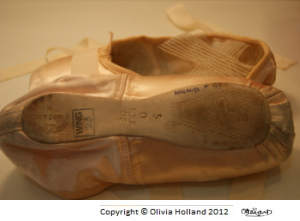
Toe Box: Situated at the front of the shoe. It acts as a platform when up on pointe.
Shank: Located inside of the ballet toe shoes and provides support for the arch of the foot.
Sole: Attached to the bottom part of the shoe and is made from a thin piece of leather.
The toe box, also known as box, covers and supports your toes. The flat end on the box gives a sturdy surface for the dancer to balance on.
Often, when your wear your pointe shoes a lot or you have had them for a long time, this is the part that can go softer quicker. You can pour shellac in the box of the shoe which definitely gives the shoes at least one more usage.
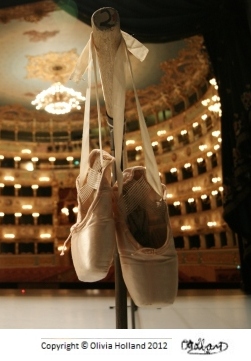
The shank is the most rigid part of the shoe, it can be hardened in the pointe shoe factory by glue, leather, cardboard, or plastic.
Every dancer has a difference preference of the strength of the shank, but it also depends on your arch and strength in the foot.
Standard pointe shoes covers the full length of the sole, which is called a full shank. However, you can vary the shank by customizing the length and altering the stiffness.
In my first professional ballet company, mostly all the dancers cut the shank themselves to give more flexibility.
Be aware when fitting a pointe shoe that if the outer sole of the shoe extends beyond the heel, the shoe is too long. Also, if the sole twists away from the foot, then this is a sign that the shoe is too narrow.
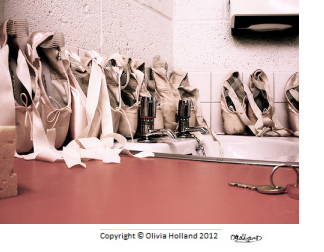
Often, when professional ballet dancers find a specific shoe or maker they are happy with, they use that pointe shoe design for the rest of their dancing career.
I have been fortunate enough to personally visit a pointe shoe factory when I was a young dancer, it was Freed pointe shoes.
I was fascinated by the individual work each maker had to do and the factory was full of manufacturers with each person on a different agenda to make the perfect pointe shoes.
Now you have the knowledge of these vital components, you are one step closer to finding your perfect shoes. Remember, it always takes more than one try to find the right ones!
return from Ballet Toe Shoes to Ballet Dancers Guide homepage or alternatively back to Ballet Pointe Shoes


