Ballet Moves
The Secret Tricks
The ballet moves of a dancer takes control, strength and precision. Whether it is a simple or challenging step, each movement is just as important and you CAN learn to practice with perfection!
In every single ballet step, you have to hold onto your technique of ballet. Even the greatest professionals get corrected everyday on their basic technique, such as turn out or co ordination, but it is a constant improvement that can always be better.
The technique is the part that makes ballet look so strong and impressive.
When you see a fabulous dancer, they will have a strong technique beneath all the impressive movements and steps.
Every step in ballet needs turn out, precise footwork and engagement of every muscle in your body.
The position of an arabesque is a basic ballet move. It might be basic, because you learn it from the very first class and it continues to be included in nearly every exercise you do in ballet. However, it is still very challenging!
An arabesque aims to keep the back straight with the leg held off the the floor behind you and all muscles engaged.
The secret trick to an arabesque, is NOT to arch your back but keep your abdominals engaged to support the lower back muscles. Otherwise, you loose control and can't be solid in the position.
There are many varieties of an arabesque, probably dozens! It can be performed in a jump, plie or a static position. It is done on pointe, on flat and in the air. Perhaps one of the most versatile positions in ballet!
Ballet moves take a lot of practice and I can't emphasize how much patience dancers need. You work your body and you focus your mind, but nothing comes instantly you have to practice.
Some more challenging ballet moves include pirouettes, fouettes and grand jetes. These are like the more 'virtuoso' parts of ballet and get a big applause from the audiences. Especially if you watch the coda part of a performance or ballet, it will contain all the impressive ballet steps and aimed to build up to a spectacular finish.
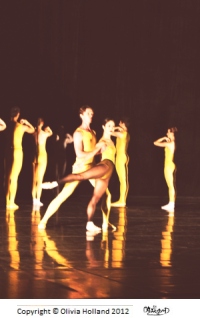
Pirouettes is something people most definitely recognize when associated to ballet. You see youtube clips of dancers whizzing around multiple times and turning impressively on stage.
Every dancer has a different tactic when it comes to pirouettes and I believe it is true that some have the natural gift over others. However, pirouettes are all about your balance and you have to coordinate the arms and stay well compact to do multiple turns.
There is no easy ballet step, or if there is, you are not working hard enough!! Every movement in ballet takes 100% commitment from your body to gain the stability and strength.
Keep working hard on your technique and you will secure the challenging ballet movements!
return from Ballet Moves to Ballet Dancers Guide homepage or alternatively back to Ballet Positions


